
What To Expect When We Work Together
Curious if this approach is right for you?
How I Think About Chronic Pain
Pain is a danger signal — a protective response generated by your brain when it senses that you're under threat. Your brain is constantly calculating where you are on a spectrum of threat versus safety, taking in information from your body and your life to determine whether you're safe or at risk. Injuries, inflammation, poor sleep, stress and even the fear of the pain itself can all add to your brain’s sense of danger. Even after injuries have healed your brain can learn to stay on high alert and continue to generate pain.
My job is to help you figure out what's driving your brain's danger signal — and what’s needed to address it. That means looking at the full picture of your health and your life. For some people this means working to reduce muscle tension and improve your mobility. For others it means working on your diet, sleep and lifestyle. The missing piece for many people in chronic pain is to address the thoughts, emotions, and beliefs that may be keeping your brain on high alert. Wherever you are in your chronic pain journey — we’ll work together as a team to discover what you need to move toward greater comfort, freedom and safety in your body.
Getting Started
Healing from chronic pain is a process. To start — we’ll have two sessions dedicated to understanding your pain, your history, your life circumstances and mapping out a plan for your care.
In your first visit we’ll spend time talking through your health history and pain story in detail — what you’ve tried, what’s helped and what hasn’t. A physical and neurological exam will give us a clearer picture of the structural or mechanical factors that may be contributing to your symptoms and if appropriate we’ll order blood work to evaluate your metabolic health. We’ll close the visit with a treatment — to start supporting your body to heal and your nervous system to shift from threat to safety.
During your second visit we’ll review your exam findings, answer your questions, discuss your specific goals, and map out a personalized care plan built around your unique needs. From there we’ll work through your pain recovery process together one step at a time.
Our Pain Recovery Toolbox
Here’s a closer look at the approaches we’ll use to support your chronic pain recovery.
Chiropractic Care
Chiropractic care is well known for helping people with pain. But the reason it works — especially for chronic pain — is often different from what most people expect.
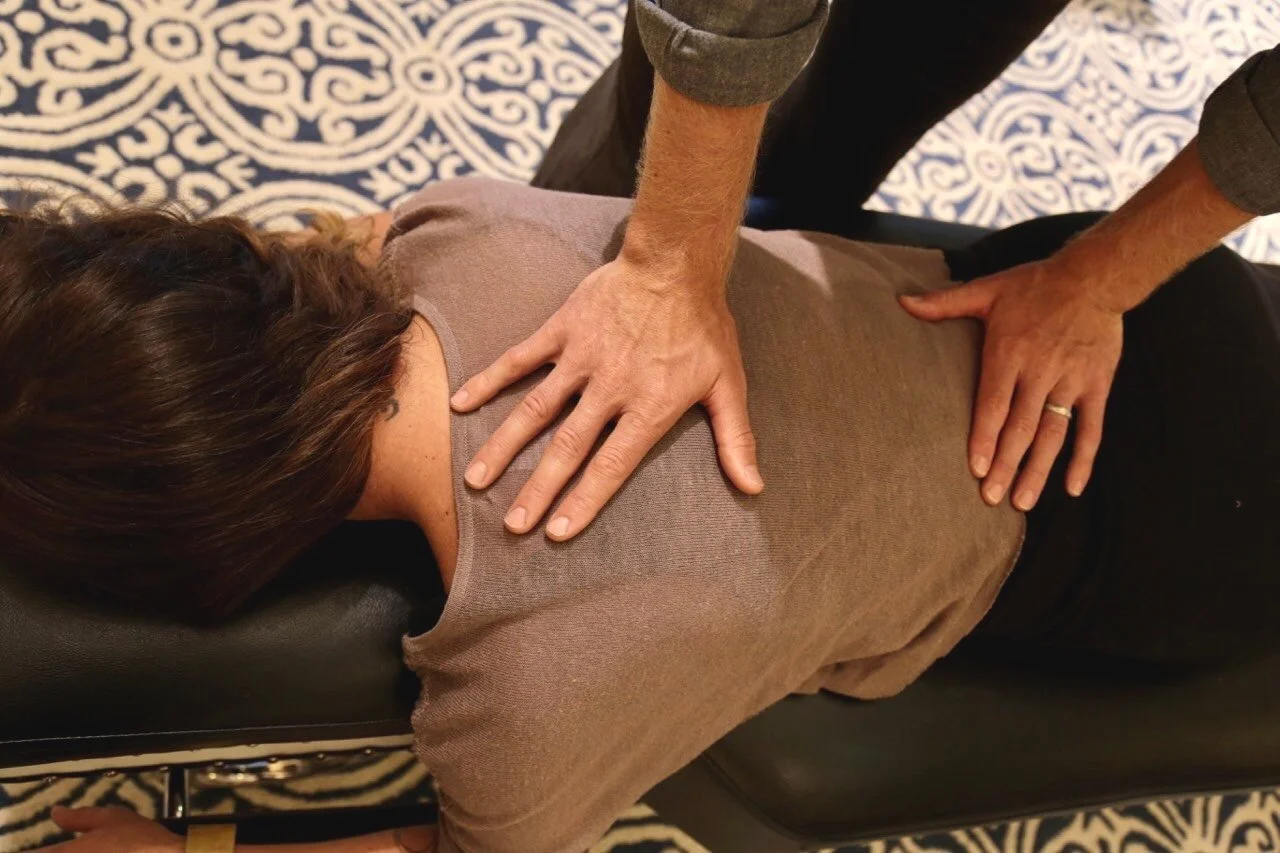
The traditional explanation is that spinal misalignments put pressure on nerves, causing stiffness and pain. Adjustments are thought to correct those misalignments, relieving the pressure and pain. Modern neuroscience tells a more nuanced story. Releasing tension, improving mobility, and increasing circulation are all genuine and welcome benefits of chiropractic care. But when it comes to chronic pain, the most significant benefit of hands-on work is less obvious — changing the conversation between your body and your brain.
Chronic pain is often driven by a brain that has learned to misinterpret normal, healthy signals from your joints and muscles as signs of ongoing damage or danger — especially in areas that were once injured but have now healed and stabilized. Gentle adjustments and bodywork introduce new information from painful areas of your body to your brain. When your brain receives fresh, accurate input about the state of your body, it can update its assessment of the integrity of your tissues and whether it’s safe to move. With a more accurate picture, there is less need for a danger signal — and less pain.
My approach to chiropractic care is gentle and specific, using a blend of adjustments and bodywork to help you release tension, move more freely, and feel more connected to your body. For many people, feeling safer in their body is one of the most meaningful shifts in their chronic pain recovery process.
Functional Medicine
Chronic pain doesn’t always have a purely mechanical or neurological cause. Metabolic factors — inflammation, gut health, blood sugar imbalances, nutrient deficiencies, and autoimmune conditions — can all contribute to the experience of pain and make recovery more difficult. For some people these factors are a significant piece of the puzzle. Identifying and addressing them can be an important component of your overall care plan.
My functional medicine approach starts with comprehensive lab testing to get an accurate picture of your metabolic health. From there we focus on specific diet and lifestyle changes to reduce inflammation and support your body’s natural ability to heal. Where appropriate, I’ll recommend targeted supplements to reduce inflammation and address specific deficiencies. If metabolic factors are contributing significantly to your pain and symptoms, the functional medicine component of your care will be tailored to your unique test results and circumstances.
Pain Reprocessing Therapy
In searching for solutions to my own chronic pain, I was surprised to discover that — even as a chiropractor — I didn’t have an accurate understanding of pain. It makes sense that pain from an acute injury is largely driven by tissue damage. But when pain persists beyond the reasonable time for an injury to heal, it often shifts to being driven more by the brain and less by the body. Most of us have been taught that pain means something is structurally wrong in our bodies. Modern pain science tells a different story — the majority of chronic pain is actually a dysfunction of the brain and nervous system, not unresolved injuries or tissue damage.
To be clear — I am not saying your pain is “all in your head.” Your pain is very real. This is simply a more modern and accurate understanding of what causes it to persist.
Persistent pain without a clear structural cause is known as neuroplastic pain — and it’s exactly what Pain Reprocessing Therapy was designed to treat. You can think of neuroplastic pain as a miscommunication between your brain and body. Your brain mistakenly interprets normal signals from your muscles and joints as signs of ongoing damage, then generates pain to alert you to the perceived danger.
PRT works by reducing fear in response to your pain — training your brain to interpret the sensations in your body more accurately. Through guided therapy techniques you’ll learn to relate to your pain with curiosity and safety rather than fear. Grounded in modern pain science, PRT gives you greater agency in your own recovery by expanding your understanding of what’s actually causing your pain. By supporting you to identify and address the life stressors that may be keeping your brain on high alert and gently shifting your body from a state of threat to a state of safety, PRT offers a unique and powerful solution to chronic pain.
To learn more about PRT visit The Pain Reprocessing Therapy Center
Fees
New Patient Intake — $295
This covers your first two visits including a comprehensive consultation, physical and neurological exam, care plan review and first two treatment sessions.
Chiropractic Visits (15 min.) — $110
You’ll receive gentle adjustments and specific bodywork to release tension, improve mobility and support the communication between your brain and body.
Chronic Pain Recovery Visits (45 min.) — $225
We’ll work toward your chronic pain recovery together using the tools that make the most sense for your unique needs.
Package discounts are available for multiple visits. Ask me for details.
Please Note: I do not accept insurance. I do provide superbills (itemized invoices) to submit for out of network coverage.
Getting Started Is Simple

Book An Appointment
Getting started with your care is easy and convenient. You can either contact my office to book your new patient visit or simply click the button below to book online. You'll receive a comprehensive health questionnaire to complete before your visit. Understanding your current symptoms and health history before your initial visit will give us a head start at uncovering what's driving your pain.

Your Initial Visit
During your initial visit we'll dive deeper into the details of your pain. We'll explore your health history and perform an exam to better understand the factors contributing to your specific symptoms. This is a space for you to ask questions and express your concerns. We'll plan the next steps to take together as we work towards resolving your pain. I look forward to hearing your story.

Your Personalized Plan
Based on everything we discuss and discover from your initial visit we'll craft a personalized plan to resolve your pain. Every person has their own unique combination of factors that contribute to keeping their pain stuck. We'll map out what's driving your pain and work through it together one step at a time. Chronic pain doesn't have to be forever pain. I'm here to help.