
Chronic Pain Videos
Below you’ll find a library of helpful videos filled with insights and strategies to help you resolve chronic pain.
Featured
Below you’ll find a library of helpful videos filled with insights and strategies to help you resolve chronic pain.
In my journey of recovering from chronic headaches, learning to turn towards my symptoms with curiosity was a critical turning point. As I spent time being curious with my body, I discovered that I was in a constant state of tension and bracing. This lead the way to unwinding the fear that was the true cause of my pain.
As I learn more about pain neuroscience and pain reprocessing therapy my thoughts around chiropractic are shifting. When it comes to chronic pain, it's not about tissue healing, it's about changing the feedback between the brain and body.
Research from Harvard Medical School reviewing the psychosocial drivers of chronic pain highlighted catastrophizing as one of the major drivers of chronic pain. The process of constantly thinking about your pain, focusing on how bad it is and feeling like there is nothing you can do to change it can actually increase the severity of your pain and reduce the effectiveness of whatever you're doing to treat it.
“Mind over matter” suggests using our minds to override our symptoms. Overriding your symptoms is unlikely to help your brain feel safer about what’s happening in your body. A better approach may be “mind in partnership with matter”
I was working with a client with chronic hip pain recently and she asked a great question "how can we tell the difference between real pain and made-up pain". Check out this video to hear my thoughts.
After a year of constant headaches and many "alternative" treatments I decided to see what western medicine could offer. After several medications from my well-meaning doctor didn't help she said, "some people just have daily headaches that don't go away". Translation - "you might just have to live with this".
The pain recipe is another one of my favorite concepts from "Tell Me Where It Hurts". Just like baking brownies, there is a collection of ingredients that get combined to trigger the brain's danger detection system and generate the experience of pain.
One of my favorite concepts from this fantastic new book by Dr. Rachel Zoffness is the idea of a pain dial. You can think of it as a volume knob in your brain that turns up or turns down your pain.
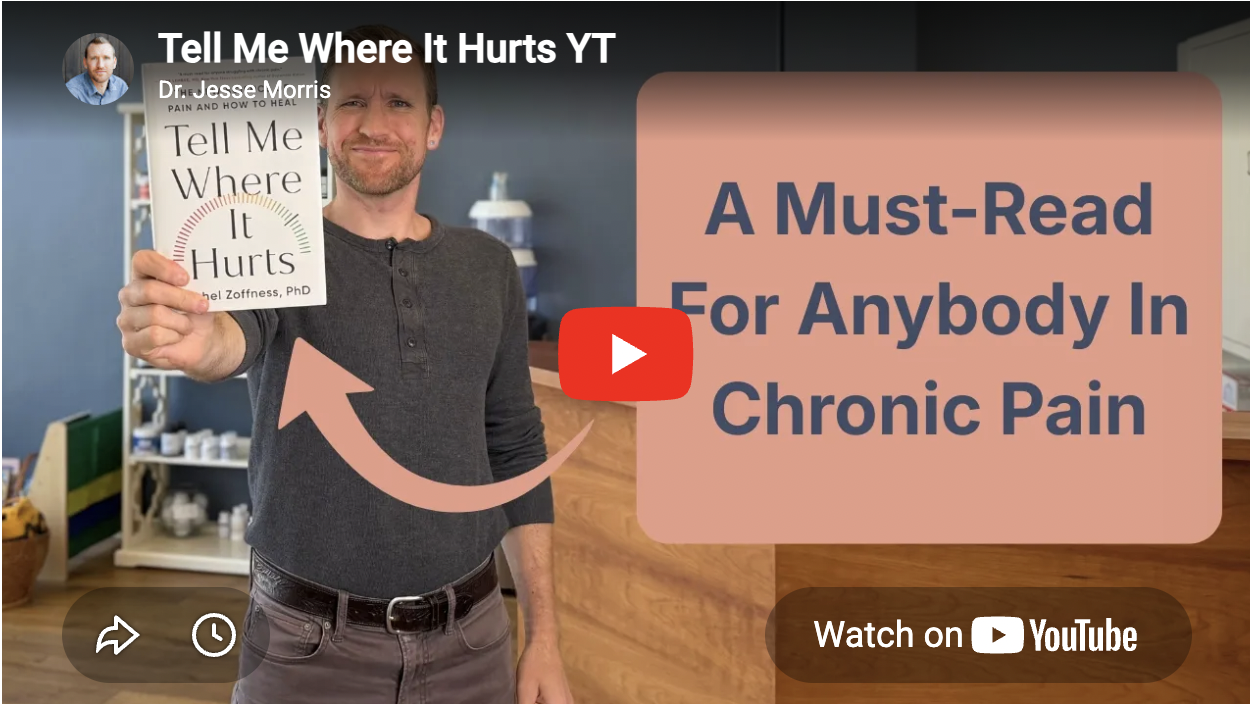
"Tell Me Where It Hurts" by Rachel Zoffness is a must-read for anybody dealing with chronic pain. She provides a clear framework to identify what may be driving your chronic pain and plethora of strategies to treat it.
We all know that pain can interfere with sleep. But... did you know that poor sleep can be a major driver of chronic pain? If you're dealing with chronic pain and poor sleep, here are a few sleep hygiene tips to dial in your sleep habits.
Sometimes when people are told that pain is generated by their brain they take that to mean that it's all in their head. This is a common misunderstanding about the neuroscience of pain. Pain is real but… it’s more complicated than a simple read out of tissue damage.
Chronic pain is defined as "pain lasting longer than the expected healing time after an injury or illness". Unfortunately the brain pathways that get activated with an injury can stay stuck on and keep producing pain long after an injury has healed. The good news is that brain pathways can be changed and chronic pain can be resolved.
Here is my main insight from week 4 of my pain reprocessing therapy training. The energy behind treatments for chronic pain is just as important as the treatments themselves. If you approach your chronic pain care with urgency and intensity that can put your brain on high alert and perpetuate your pain.
This is week 3 of my pain reprocessing therapy training. My key insight from the training this week is how your overall sense of safety in life can influence your experience of pain. For some people, finding ways to feel safer in their life and in their body is the most important thing they can do to alleviate their pain.
I'm in week 2 of my pain reprocessing therapy training and honestly, it's blowing my mind. My highlight from this week is a deeper understanding of neuroplastic pain. The short version is that your brain can start misinterpreting normal, healthy signals from your body as if they're dangerous and create pain to alert you about the danger.
The bio-psycho-social-spiritual model of chronic pain acknowledges that chronic pain is much more than just a read out of tissue damage. Stress, trauma, emotions and relationships can contribute to chronic pain just as much as injuries and inflammation.
Over 50 million adults in the U.S. live in chronic pain. It's the leading cause of disability and the financial burden of chronic pain is greater than cancer, heart disease and diabetes combined. As staggering as these statistics are, the true heartbreak around chronic pain lays in the day to day impacts on real people's lives.
This is the first video in a series on chronic pain. To start off this series I wanted to expand your understanding of what pain actually is. You may be surprised to learn that modern neuroscientists have discovered that pain is more than just a signal from your body about an injury. Pain is an alarm signal, created by your brain to alert you when it perceives some danger or threat.